Sierra Railroad 1955
HH Jct to Jamestown and Melones
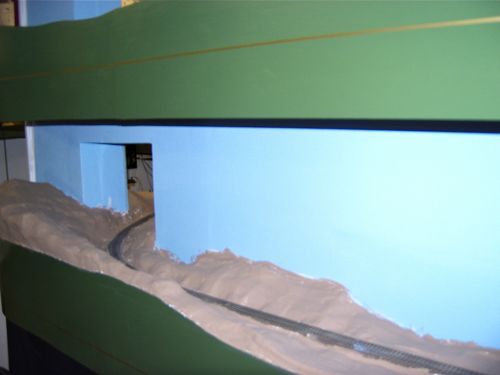
The Sierra mainline heading starting up the Canyon towards Hetch Hetchy Jct. This had been unpainted white plaster until early October when I had some paint mixed up to match the color of the brown paper bag scenery (12-09).
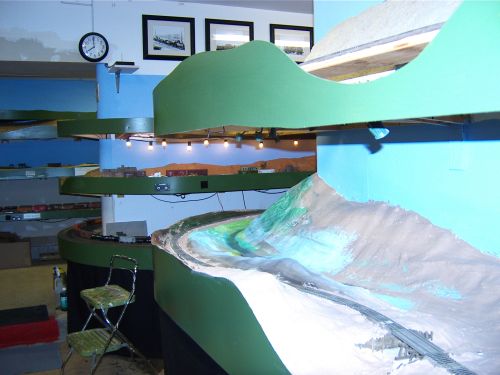
Continuing up the Canyon. The green painted area was created by Ron when he used the unfinished plaster as a place to clean his paint brushes when he finished a session of backdrop painting. (12-09)
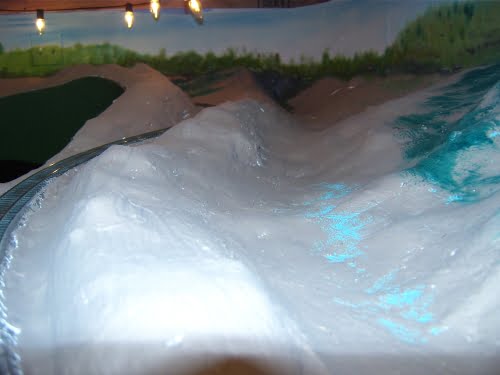
January 2011 – The Sierra mainline winding up through the canyon towards Hetch Hetchy Jct. The backdrop painting adds a lot to the unfinished painted hardshell scenery of the photo below.
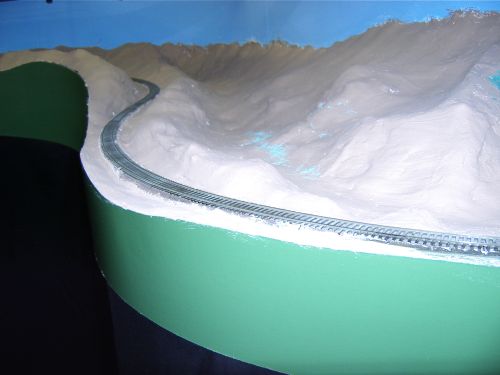
Continuing towards HH Jct (12-09)
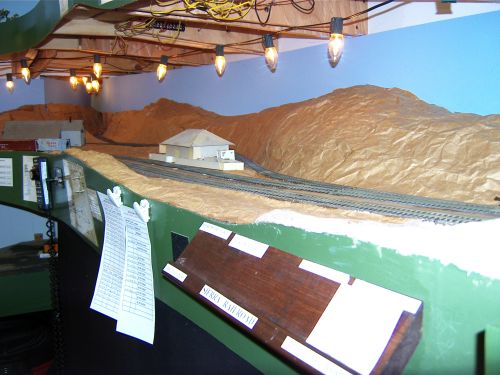
Hetch Hetchy Junction. That’s a mock up the HH Station. The track running behind the station is the Hetch Hetchy mainline leading to the Wye and then continuing onto Groveland staging. (12-09)
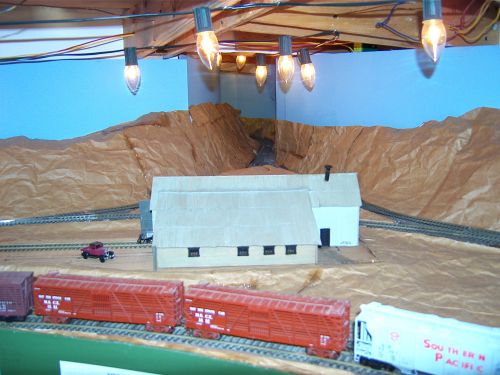
Behind the temporary Engine House is the HH Wye and the mainline to the Groveland staging. (12-09)
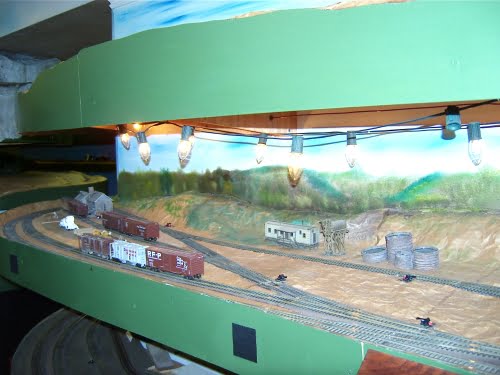
January 2011 -The east end of Hetch Hetchy Jct now with painted back drop. Compared to the picture below before the backdrop was painted.
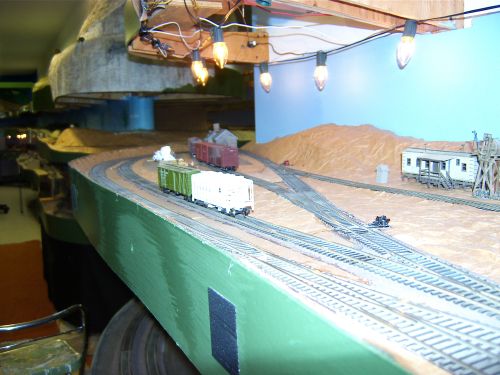
The east end of HH Jct. The string of box cars in the background have been spotted at HH Freight and HH Maintenance.
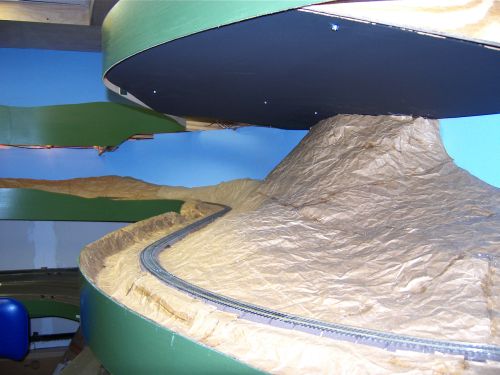
Having left HH Jct the mainline continues its climb up the Canyon towards Keystone (12-09)
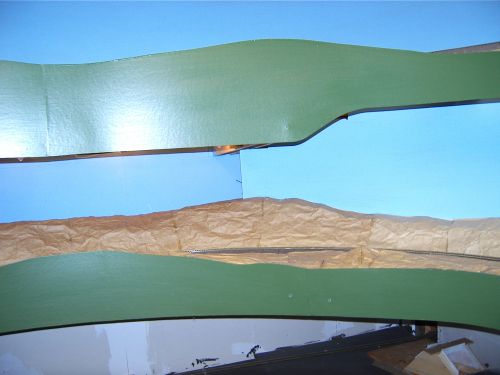
The Sierra mainline is the visible track in the center of the photo. The HH mainline running to the staging track in Groveland is behind the ridge on the left side of the photo (12-09)
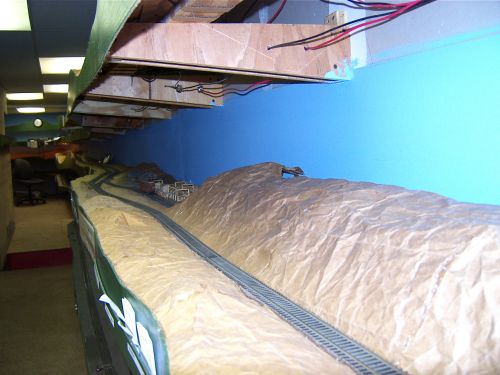
The mainline approaching the siding at Keystone. The Groveland staging track is between the ridge and the backdrop. Access to this track is not required during an Op Session. Between sessions the 2 trains that depart from Groveland are made up in HH Jct and then backed into staging. (12-09)
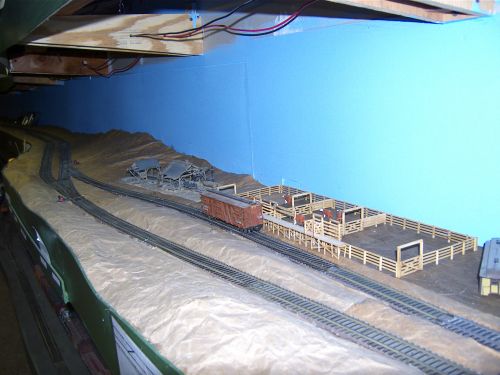
Keystone Cattle is in the foreground and the siding at Keystone is in the background. The afternoon passenger trains meet at Keystone. (12-09)
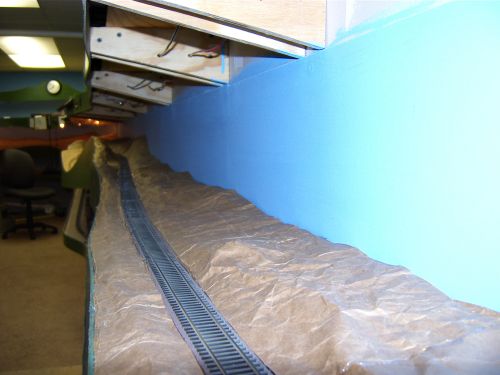
Leaving Keystone and heading towards Quinn’s Spur. Hwy 108/120 would be just to the left the track with the Red Hills on the right. The Red Hills will be painted on the backdrop. (12-09)
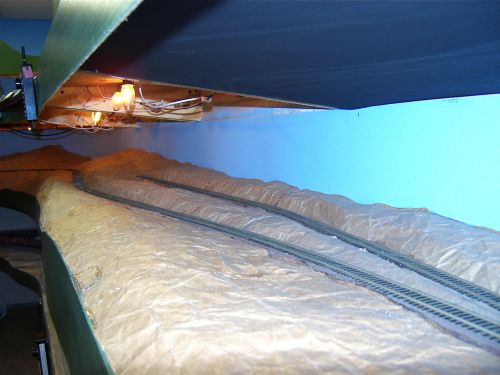
Quinn’s Spur. The spur was used when westbound freights had to double Chinese Hill. The freight would leave the second half of its train at Chinese and take the first half up to Quinn’s Spur and then would back down to Chinese to pick up the second half of its train. As the train approached Quinn;s Spur the locomotive would cut off from the cars it just brought up from Chinese. It would then back down on the Spur and pick up the cut of cars it left there earlier. Once the train was back together it would proceed towards Keytone. (12-09)
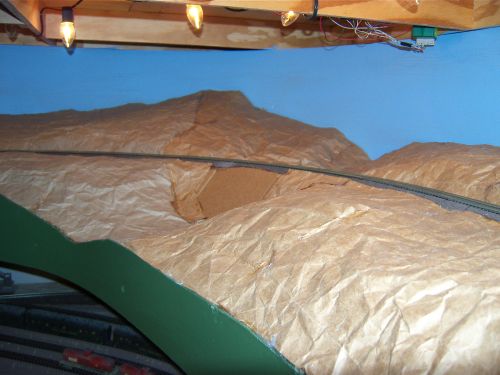
The Sierra mainline starting down the grade at Chinese hill. (12-09)
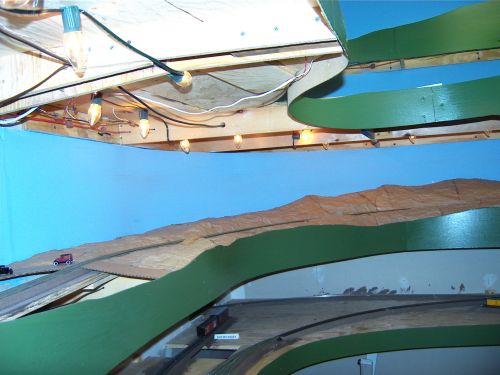
Chinese is just out of the photo on the left. You are looking west at the base of Chinese Hill. (12-09)
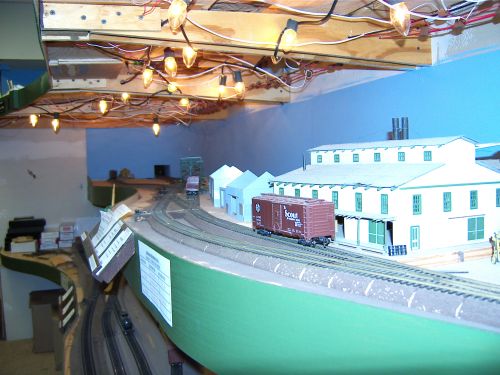
Snyder Mill at Chinese. This is the first mill you arrive at as you run eastbound out of Oakdale. The mill went into production in the early 1950’s and the logs are brought in by truck. Today the mill is owed by SPI and is still in operation. As the mainline proceeds east it runs through blue backdrop and behind the hot water tank and heater.(12-09)
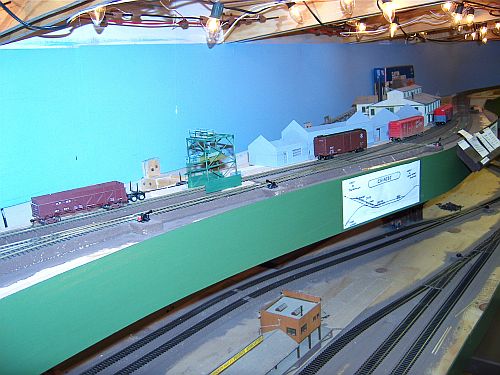
Chinese looking back to the west. The wood chip loader is in the center of the picture. Below Chinese is the SP track at Meinke Junction. The two track siding is part of the AT&SF staging tracks at Riverbank.
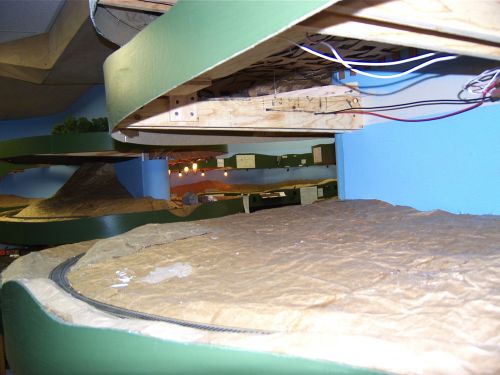
Running east of Chinese towards Hatler’s Quarry. This would be area around Montezuma Jct. (12-09)
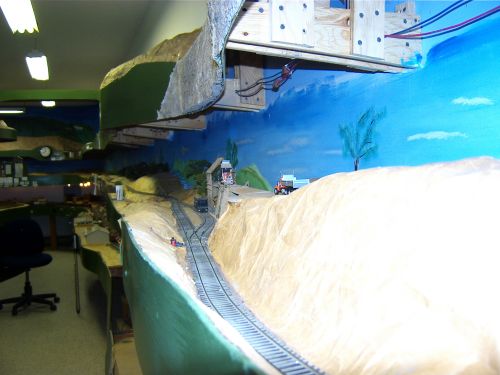
This short siding is at Hatler’s Rock. The siding is located just west of the crossing of Woods Creek where there is a small quarry. This siding is where the current Jamestown train excursions run around their train before heading back to Jamestown. The road coming off the structure leads to a quarry which is not modeled. (12-09)
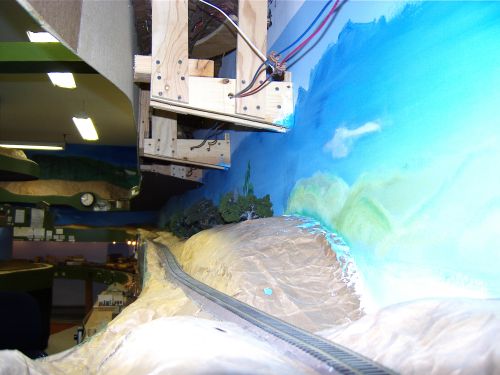
The mainline running east towards Jamestown. The mainline in the foreground is crossing the fill over Woods Creek. (12-09).
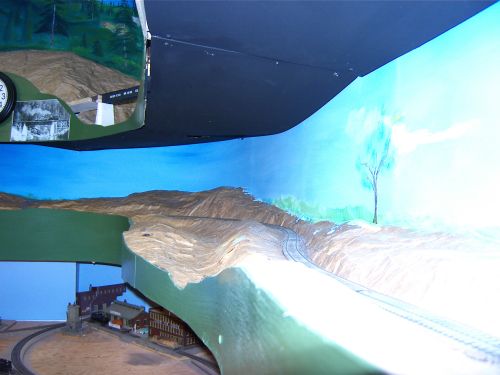
The mainline rounding the curve before arriving in Jamestown. (12-09)
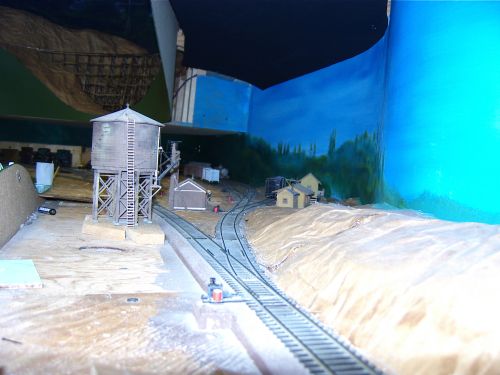
The entrance to Jamestown. The track curving off to the right is the mainline that will wrap around the back of Jamestown as it heads up to Lime Kiln. The track to the left is the lead into Jamestown Depot, Freight Shed and the engine facility. The water tank will eventually be replaced with a model of the Jamestown tank.
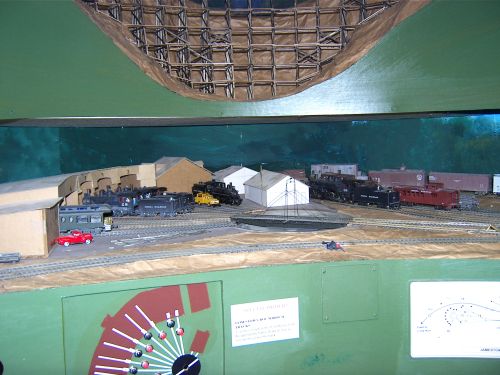
The Jamestown turntable and roundhouse. The track closest to the fascia is the mainline heading towards the Depot. The mainline to Lime Kiln runs behind the roundhouse. Starting with the first locomotive on the left and working clockwise the first loco is the #28, then #24, followed by the #18. The small vehicle is a static model of an Hi-Rail pick up truck. The last loco is the #10 which is really the Sierra #8 (the #8 was used for the WSLCo shay). Just to the right of the photo is the Sierra #38. At some point the roundhouse will be scratched built and will be full size. The backside will be truncated so that eastbound mainline can run behind the building.
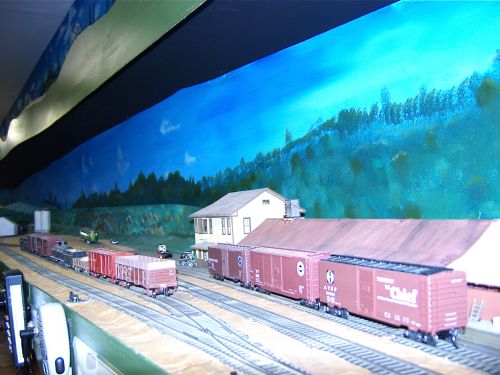
The Jamestown Freight House and Station, both are models from Scale Town Models. (12-09)
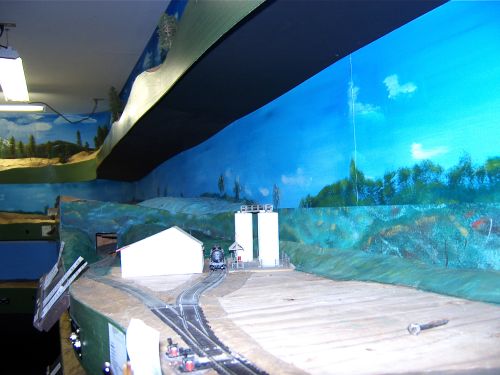
The east end of Jamestown. The track between the fascia and the building is the Angels Branch that runs to Melones. As it runs under the main to Lime Kiln the Melones Branch track will become hidden until it reaches Melones behind the staircase. (12-09)

January 2011- Melones with the added base scenery and backdrop. The spurs for the Team Track and Stamp Mill were flipped as you can see when you look at the last year pictures below.
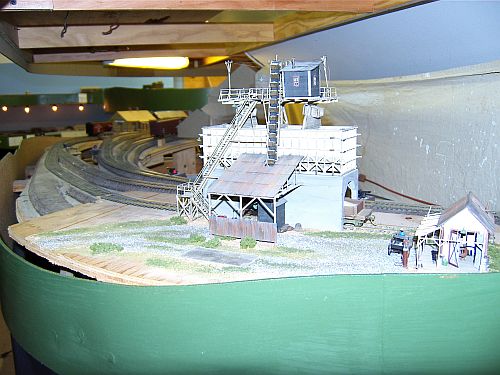
The track from Jamestown comes into Melones from the right behind the small building. Melones Rock uses mine tailings to provide rock for road maintenance and dam expansion at Hetch Hetchy. They also ship sand to Jamestown and Tuolumne for locomotive service.
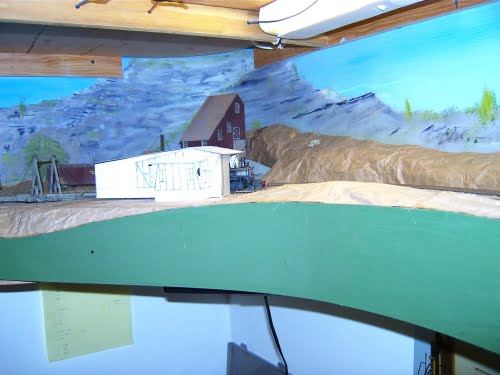
January 2011 -The end of the Melones branch with the Engine House and Turntable. That’s the Melones Gold Mine in the background.
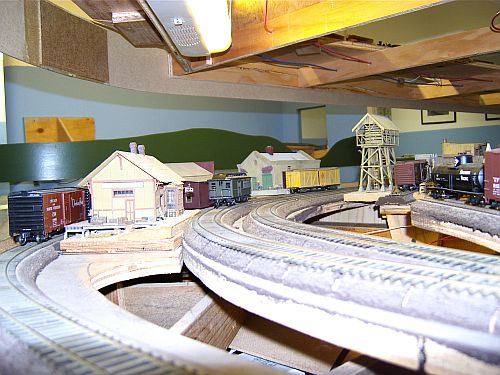
The Melones Station is on the left. The Combine will be used as the caboose on the first freight into Jamestown. It will be dropped off at Jamestown so it can be added to the westbound Sierra Passenger heading for Oakdale.
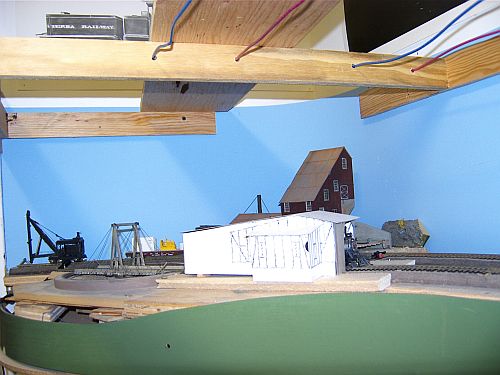
The Melones Engine House and turntable. Just sticking out its nose out of the engine house is the Sierra #30. During the course of an operating session the #30 will make two round trips to Jamestown and back. Behind the engine house is the Melones Gold Mine. The discovery of a large gold deposit was what prompted the Sierra to relay their tracks back into Melones in the early 50’s.
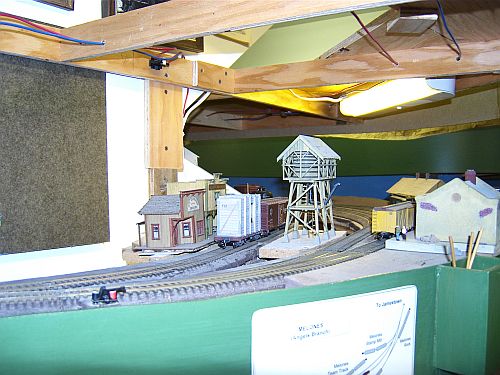
Looking west back towards the Melones Station. The old Yosemite Valley water tank was bought second hand by the Sierra, dismantled at Bagby and reassembled at Melones.
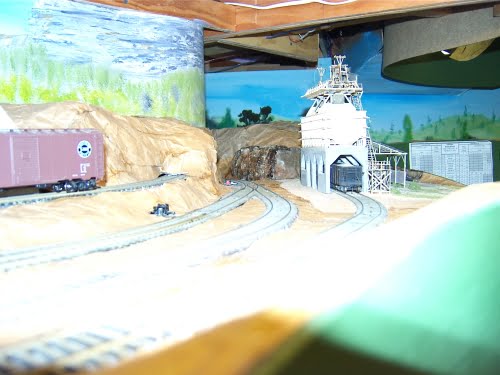
January 2011 -Looking back towards Jamestown. The branch disappears into the cut and then re-appears at Jamestown.
Railroad Pages
- Welcome
- About the Layout
- What's New
- Operations Overview
- Photos
- Prototype Track Drawings
- Contact/Location
- Research Sources
- Sierra Railroad Op Session Calendar
Sierra Historical & Modeling Seminar
Recent Posts
Post Archives
- August 2007 (1)
- May 2007 (1)
Post Categories
- Announcements (2)
Historical Groups
Model Mfgs
Operations
Other Layout Links
Other Sites
Meta
copyright © 2007-2024 John Zach -- WP-Design: Vlad -- Powered by WordPress -- site by webdancers